
0% VAT on heat pumps for homes until March 2027
Ground source heat pumps installed by a trusted Dorset company
Registered & accredited




Ground source heat for properties with land or room for a borehole
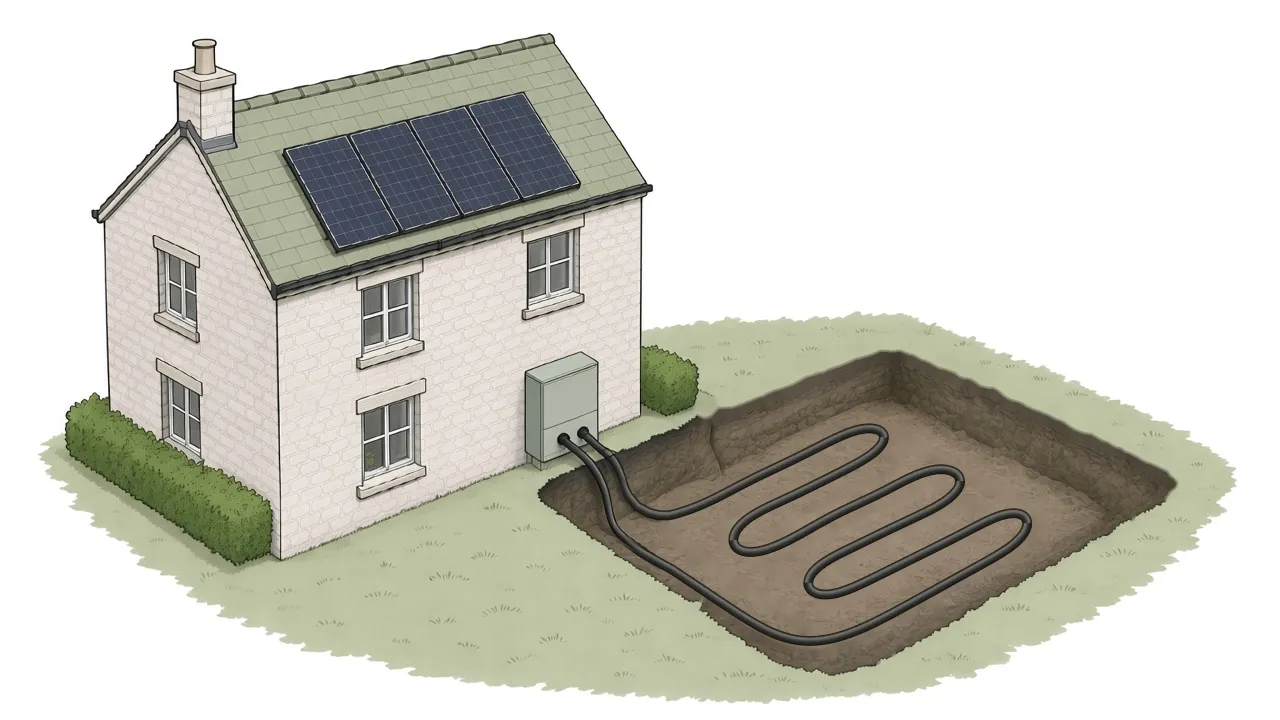
Ground source heat pumps suit residential and commercial properties with land available for the trenches required or access to create a borehole. When the site suits it, you get steady heat with no external units outside the house.
Our highly experienced heating engineers don't just install your heat pump. They design a system to ensure your radiators, cylinder and pipework are optimised for heating your specific home or business. We also manage and coordinate the specialist ground works so you have one point of contact from start to finish.
-
8-12°C
The temperature of the ground 10 to 15 metres down, all year round. Shallower trenches vary a little more, but stay far steadier than winter air.
-
Out of sight
The collector is buried in trenches or a borehole. When the ground works are finished, nothing is left on the outside of the house.
-
50+ years
Typical life the Energy Saving Trust gives for the buried ground loop. The heat pump unit typically lasts 20 to 25 years.
-
One team
One point of contact from survey through to servicing, including the specialist ground works.
Could ground source suit your property?
It asks more of the site than air source does. If yours cannot give it, we will say so on the phone and talk about air source instead.
Usually a good starting point
-
Land or borehole access
There is usable land for trenches, or access for a drilling rig where space is tight.
-
Off the gas grid
The property is off the gas grid, on oil, LPG or electric heating.
-
Steady heat demand
The heat demand is steady: a larger house, a farmhouse, or a building used most of the day.
-
Major renovation planned
You are renovating anyway, so ground works and new pipework fit the plan. Most new builds cannot claim the Boiler Upgrade Scheme.
Worth a conversation first
-
Tight access
Small or enclosed plots with no way in for a digger or a rig.
-
Protected site
Listed buildings, protected trees, ecology or archaeology that limit where you can dig.
-
Difficult ground
Ground you know is rocky, waterlogged, or crossed by drains and buried services.
-
Air source may do
A smaller, well insulated house where air source would do the job with less disruption.
How does a ground source heat pump work?
- Below ground
Heat is collected from the ground
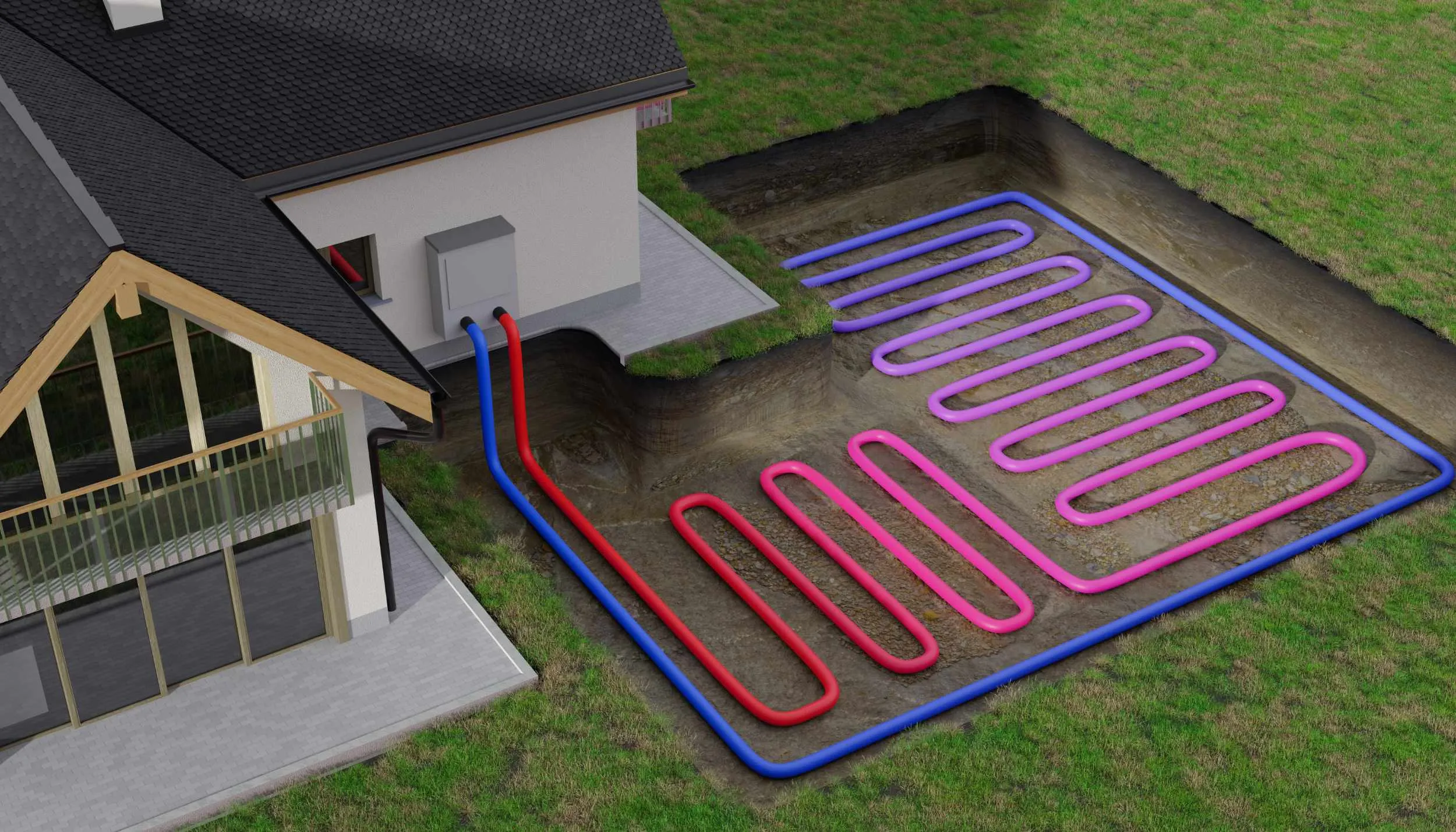
Pipe laid in trenches or run down a borehole carries a water and antifreeze mix through the ground. Trenches need more land. A borehole uses less of it but needs a specialist rig.
- In the loop
It picks up heat from the ground
Below the surface, the ground holds its warmth far better than the air does. The fluid comes back a little warmer than it went out.
- Heat pump
The temperature is raised
Inside the building, a compressor concentrates that warmth into something the heating system can use.
- Cylinder
Hot water is stored for the building
The heat pump heats a compatible cylinder so the building has hot water on tap, not only space heating.
- Indoors
Warm water moves through the building
Compatible radiators or underfloor heating run cooler and for longer than a boiler would.
The Boiler Upgrade Scheme in brief
The scheme offers a £7,500 grant towards a ground source heat pump, or £9,000 if you are off the gas grid and replacing oil or LPG heating, for applications made by 31 March 2027. It covers homes and business premises. An MCS certified installer claims the grant, and that is arranged as part of the installation. Eligibility depends on the property, so ask us before you budget around it.
-
You own the property
Owner-occupiers, landlords and many small commercial buildings in England and Wales.
-
An existing building
Most new builds cannot claim, though some self builds can. Social housing is not covered.
-
Replacing your heating
Gas, oil, LPG or electric heating. Replacing a heat pump you already have does not count.
Four steps to lower carbon heating with JPF Renewables
-
Talk to an expert engineer
A phone conversation to understand your property and make sure we are the right fit for your needs.
-
Survey and heat-loss assessment
We visit your property and carry out a detailed survey and room by room assessment, including the ground or borehole checks the site needs.
-
A clear written proposal and transparent quote
Everything you need to understand our recommended heating system, the costs and the timeline.
-
Installation is just the start
Our experienced engineers don't just install your new kit. They will show you how to make the most of your new system and book your first service. We see installation day as the start of our commitment to you, not the end.
Need help with an existing ground source system?
We can repair and service many existing ground source heat pumps including those installed by a different company.
How much land does it need?
There is no honest rule of thumb. Heat demand, ground conditions, trench layout and access all change it. Where land is tight, a borehole uses far less of it but brings drilling into the job.
What is the difference between trenches and a borehole?
Trenches lay the pipe flat across a larger area and need a digger. A borehole runs it down a drilled hole, using much less land but needing a specialist rig and suitable geology.
How disruptive are the ground works?
It depends on trenches or a borehole, the access, and what is on the land now. What gets dug, where, and how it is put back is set out in the proposal before any work starts.
Is ground source better than air source?
Neither is better everywhere. Ground source earns its place where there is land or borehole access and a steady heat demand. Air source is usually simpler where a unit can sit well outside and digging is not practical.
Will it do heating and hot water?
Yes, when it is designed for both. The heat pump, cylinder, radiators, controls and the building's demand have to be worked out together.
Can I spread the cost?
The government's Warm Homes Loan Scheme offers low or zero interest loans for heat pumps in homes through participating lenders. It can cover the cost above the Boiler Upgrade Scheme grant, or the whole installation. Credit checks apply.
Can you service a system someone else installed?
We can repair and service many existing ground source heat pumps including those installed by a different company. Give us a call and we can confirm based on your specific system.
Our services
-
Air source heat pumps
Efficient heating and hot water using warmth from the air. Installation, service, and repair for homes and commercial properties across West Dorset.
-
Ground source heat pumps
Explore whether stable heat from the ground could suit your land, building, and heating demand.
-
Solar power
Commercial and residential solar power, with battery storage where it helps. Design, installation and servicing across West Dorset.
-
Service and repair
Servicing and repair for heat pumps and solar power systems, including ones installed by other companies.
Give us a call
Our experienced engineers are available to give you expert advice and discuss the specific needs of your property.
Monday to Friday, 9am to 5pm
- info@jpfrenewables.co.uk
- Depot
- Granby Trading Estate: Unit 2, 15 Cambridge Rd, Weymouth DT4 9TJ
Get directions - Areas covered
- Weymouth, Portland, Dorchester and across Dorset